In the realm of this hermetic lineage, talismans emerge as potent symbols of magic and mystery, wielded by initiates in various mystical and therapeutic contexts. By examining the properties and associations of talismans, we gain insight into the symbolic language of magic and the underlying philosophy that governs their creation and utilization.
The Essence of Talismans
Talismans, as material objects or symbols, embody magical powers that are often utilized in rituals and mystical practices. The concept of talismans transcends their physical form, as they are imbued with symbolic and mystical properties that render them potent tools for initiates. The association of talismans with kabalistic and secret societies further emphasizes their significance within the realm of magic and mystery.
Celestial Influences and Symbolism
The sun, moon, and mercury talismans each bear distinct characteristics that reflect their celestial associations. The presence of Jupiter on the reverse side of sun talismans reveals the place of this celestial body in invoking its influence. Similarly, the moon talismans feature characters or spirits of the moon, with the dog's head on the reverse side of the MOON TALISMAN serving as a distinctive feature. The mercury talisman, with its dog's head on the reverse, attests to the necessity of symbolic associations in the construction of talismans.
Linguistic and Alphabetical Mysticism
The incorporation of Arabic language and the Trithemius alphabet in talismans demonstrates the significance of linguistic and alphabetical mysticism in their construction. The use of specific languages and alphabets imbues talismans with symbolic power, rendering them more effective in magical and mystical contexts.
Trigrams and Fohi: Fundamental Structures of Symbolic Energy
Trigrams, as fundamental components of kabbalistic and magical texts, are often inscribed on talismans as a means of structuring symbolic energy. The association of Fohi with trigrams and talismanic practices reveals the place of this mythical entity within the domain of magic and mystery.
Protection and Preservation: Silken Bags and Siege Symbols
The use of silken bags to protect and preserve talismans emphasizes the importance of safeguarding these potent symbols of magic. The incorporation of siege symbols in talismans serves as a means of protection against external threats, further demonstrating the significance of preservation within the domain of magic and mystery.
Bibliographia & Fontes
Primary Source Books Used in This Article
The doctrines, historical citations, and symbolic correspondences synthesized in this article are drawn from the following primary works and chapters:
- I.Éliphas Lévi, Transcendental Magic: Its Doctrine and Ritual (Dogme et Rituel de la Haute Magie)1856 / 1896 trans.
Translated and Annotated by A. E. Waite
Chapters / Sections Consulted:Part II: The Ritual of Transcendental Magic
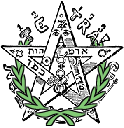
Transcendental Magic: Its Doctrine and Ritual (Éliphas Lévi)
The cornerstone of modern occultism and ceremonial magic, expounding the equilibrium of the Astral Light, the Pentagram, and the correspondence of the Twenty-Two Arcana.