It explores the sympathy of concepts, substances, rituals, lineages, and persons, revealing a network of correspondences and influences.
Historical & Symbolic Context
The Interconnectedness of Concepts and Substances
The text reveals a profound sympathy between concepts and substances in the alchemical and magical traditions. For instance, the entities of Coldness and Humidity are represented as opposing yet necessary concepts in the alchemical process, symbolizing the dynamic interplay between seemingly contradictory yet complementary forces. Similarly, the concepts of Dryness and Heat are integral to the manipulation and evolution of materials, reflecting the continuous interplay of opposing forces in achieving alchemical aims.
The Importance of Rituals and Lineages
Rituals and lineages play a essential part in the alchemical and magical traditions. The text highlights the significance of rituals such as the invocation of spirits, the use of magical formulae, and the practice of transmutation. These rituals are often tied to specific lineages, such as the Kabbalistic ideas of Levi or the Mysteries of Eleusis. The relationships between these rituals and lineages demonstrate the importance of tradition and heritage in shaping the practices and philosophies of these esoteric traditions.
The Role of Persons in Shaping Traditions
Persons play a significant role in shaping the traditions and philosophies of the alchemical and magical traditions. The text highlights the influence of individuals such as Levi, Swedenborg, and Canidia on the development of these traditions. These persons often serve as vessels for the transmission of knowledge and ideas, and their contributions can have a profound impact on the evolution of the traditions.
The Principle of Polarity
The principle of polarity is a recurring theme throughout the text. The sympathies among these principles such as Fear and Courage, Love and Hate, and Sloth and Activity demonstrate the idea that opposing forces can be transformed through the principle of polarity. This principle is also applied to physical phenomena, such as Heat and Cold, and is used to understand the concept of polarity in mental states.
The synthesis of principles and correspondences in the alchemical and magical traditions reveals a network of correspondences and influences. The sympathy of concepts and substances, the importance of rituals and lineages, and the role of persons in shaping traditions all contribute to a deeper understanding of the underlying principles and philosophies that govern these esoteric traditions. The principle of polarity, in particular, emerges as a recurring theme, highlighting the idea that opposing forces can be transformed and balanced through the application of this principle.
Bibliographia & Fontes
Primary Source Books Used in This Article
The doctrines, historical citations, and symbolic correspondences synthesized in this article are drawn from the following primary works and chapters:
- I.Éliphas Lévi, Transcendental Magic: Its Doctrine and Ritual (Dogme et Rituel de la Haute Magie)1856 / 1896 trans.
Translated and Annotated by A. E. Waite
Chapters / Sections Consulted:Part I: The Doctrine of Transcendental Magic · Part II: The Ritual of Transcendental Magic - II.Manly P. Hall, The Secret Teachings of All Ages1928
An Encyclopedic Outline of Masonic, Hermetic, Qabbalistic and Rosicrucian Symbolical Philosophy
Chapters / Sections Consulted:Ch. “Ceremonial Magic and Sorcery” · Ch. “Stones, Metals, and Gems” · Ch. “An Analysis of Tarot Cards” · Ch. “The Hermetic and Alchemical Figures of Claudius de Dominico Celentano (1606)” · Ch. “Introduction to Symbolical Philosophy” · Ch. “Conclusion” - III.Max Heindel, The Rosicrucian Mysteries: An Elementary Exposition of Their Secret Teachings1911
The Rosicrucian Fellowship
- IV.A. E. Thierens, The General Book of the Tarot1930
Containing the Astrological Key to the Esoteric Tradition of the Greater and Lesser Arcana (Intro. by A. E. Waite)
- V.The Three Initiates, The Kybalion: A Study of the Hermetic Philosophy of Ancient Egypt and Greece1908
The Seven Hermetic Principles
- VI.Arthur Edward Waite, The Pictorial Key to the Tarot1910
Being Fragments of a Secret Tradition under the Veil of Divination
Further Inquiry in This Cycle
Companion Studies & Disputations
The Nexus of Invocation and Magical Servitude
In the realm of this hermetic lineage, a network of entities, substances, and relationships converges to form a rich body of magical practice and…
The Interconnected Web of Human Will, Morality, and Bewitchment
The analysis reveals a complex interplay among these traditions, including the Magician, Sorcerer, Cain, Abel, and the Great Magical Agent, which…
Astral Light, Necromancy & Celestial Planisphere in Theurgy
The community of concepts known as the Astral Light tradition examines the esoteric domain of Astral Light, a profound and manifold entity that permeates…
Black Magic and the Sabbath
By examining the correspondences among these traditions, lineages, and practices, we will uncover the underlying philosophical framework that governs this…
Kabalists & Magical Ceremonies: Paradigm
The Kabalists tradition presents a complex network of esoteric concepts, entities, and relationships that form a cohesive philosophical framework. Central…
The Web of Affliction
The the Affliction tradition dataset presents a complex network of concepts that weave together to form a rich body of ideas surrounding affliction…
The Dark Arcana of Venomous Magic
The Venomous Magic tradition is a complex network of entities and relationships that revolve around the concept of Venomous Magic. This dark and sinister…
Sympathy, Love, and the Interconnectedness of Human Experience
In the realm of human experience, concepts such as sympathy, love, and domination intertwine to form a network of relationships that shape our…
The Ceremonial Dynamics of Pabiel
The analysis explores the relationships between key entities, including White Magic, Spirits of Jupiter's Order, Pabiel, Jesu of Nazareth, Fiat, and…
The Dynamics of Magical Influence and Redemption in Philtres
The doctrine of Philtres encompasses relationships between magical substances, rituals, and characters, all centered around the themes of love, devotion…
Transmutation & Heat: The Harmony of Opposites
By examining the entities, relationships, and concepts presented, we can gain a deeper understanding of the philosophical and symbolic frameworks that…
Post-death Period & Post-mortal Review: The Spirit's Journey
The post-death period, a critical 3.5-day window, is a complex and manifold phenomenon that has far-reaching implications for the spirit's journey. Through…
Evocation Of Spirits: The Ephemeral Nature of Evil
By analyzing the classical sources and relationships, this synthesis reveals a network of ideas that challenge traditional notions of evil and the human…
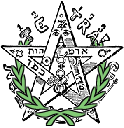
Transcendental Magic: Its Doctrine and Ritual (Éliphas Lévi)
The cornerstone of modern occultism and ceremonial magic, expounding the equilibrium of the Astral Light, the Pentagram, and the correspondence of the Twenty-Two Arcana.