The Evolution of Western Philosophy: Synthesizing the Ideas of this hermetic lineage
Historical & Symbolic Context
The analysis reveals the sympathy of their thoughts and contributions, highlighting the evolution of Western philosophy from the Socratic tradition to the emergence of Stoicism and skepticism. By examining the relationships between key figures such as Socrates, Antisthenes, Aristippus, and Zeno, this synthesis demonstrates the dynamic exchange of ideas that shaped the development of Western philosophy.
Socratic and the Emergence of Cynicism
The philosophical ideas of this hermetic lineage are rooted in the Socratic tradition, which emphasized the pursuit of wisdom, ethics, and rational inquiry. Socrates' method of questioning and dialogue, as recorded by Xenophon, laid the groundwork for subsequent philosophical schools. The Cynics, founded by Antisthenes, a pupil of Socrates, adopted a more radical approach, advocating for a simple and austere lifestyle in accordance with nature. Antisthenes' teachings emphasized self-reliance, personal freedom, and the rejection of worldly possessions, reflecting the influence of his mentor Socrates.
The Cyrenaic School and the Pursuit of Pleasure
The Cyrenaic school, founded by Aristippus of Cyrene, a pupil of Socrates, took a different approach, emphasizing the pursuit of pleasure as the primary goal of life. Aristippus' teachings centered on hedonism, advocating for the immediate and spontaneous pursuit of pleasure as a means to achieve a fulfilling existence. The Cyrenaics practiced hedonistic philosophy, which influenced the development of Western thought, particularly in the areas of ethics and moral philosophy.
The Emergence of Stoicism and Skepticism
The Stoic school, founded by Zeno, a pupil of Crates the Cynic, marked a significant shift in Western philosophy. Stoicism emphasized reason, self-control, and inner strength, advocating for a life in accordance with nature. The Stoics, including Antipater, continued the tradition, developing a complex system of thought that would influence Western philosophy for centuries. Meanwhile, skepticism, which emerged as a philosophical approach, questioned established doctrines, emphasizing doubt and the limitations of human knowledge. Arcesilaus, a pupil of Speusippus, contributed to the skeptical tradition, which would later influence the development of Western thought.
Ideas
The relationships between the philosophers and schools within this esoteric current demonstrate the dynamic exchange of ideas that shaped the development of Western philosophy. Socrates' influence on Antisthenes and Aristippus, as well as the connections between the Cynics, Cyrenaics, and Stoics, highlight the sympathy of their thoughts and contributions. The synthesis of ideas within this tradition reveals a rich body of philosophical thought, which would continue to evolve and influence Western philosophy for centuries to come.
Bibliographia & Fontes
Primary Source Books Used in This Article
The doctrines, historical citations, and symbolic correspondences synthesized in this article are drawn from the following primary works and chapters:
- I.Manly P. Hall, The Secret Teachings of All Ages1928
An Encyclopedic Outline of Masonic, Hermetic, Qabbalistic and Rosicrucian Symbolical Philosophy
Chapters / Sections Consulted:Ch. “Introduction to Symbolical Philosophy” · Ch. “The Mysteries and Their Emissaries” · Ch. “The Pythagorean Theory of Music and Color”
Further Inquiry in This Cycle
Companion Studies & Disputations
The Interplay between Hedonism and Skepticism
This essay examines the philosophical landscape of the Cyrenaics, a school of thought that emerged in ancient Greece, focusing on the pursuit of pleasure…
Zeno: The Enduring Legacy of Stoicism
This essay examines the philosophical landscape of Stoicism, a school of thought founded by Zeno, a philosopher from Northern Greece. By examining the…
The Intellectual Tapestry of Hypopneuma
The doctrine of Hypopneuma encompasses philosophical thought, woven from the contributions of various individuals and their relationships. This community…
Socrates & Antisthenes: The Socratic Circle
Through a synthesis of the classical sources and relationships, this essay explores the core philosophies and values that defined the Socratic school of…
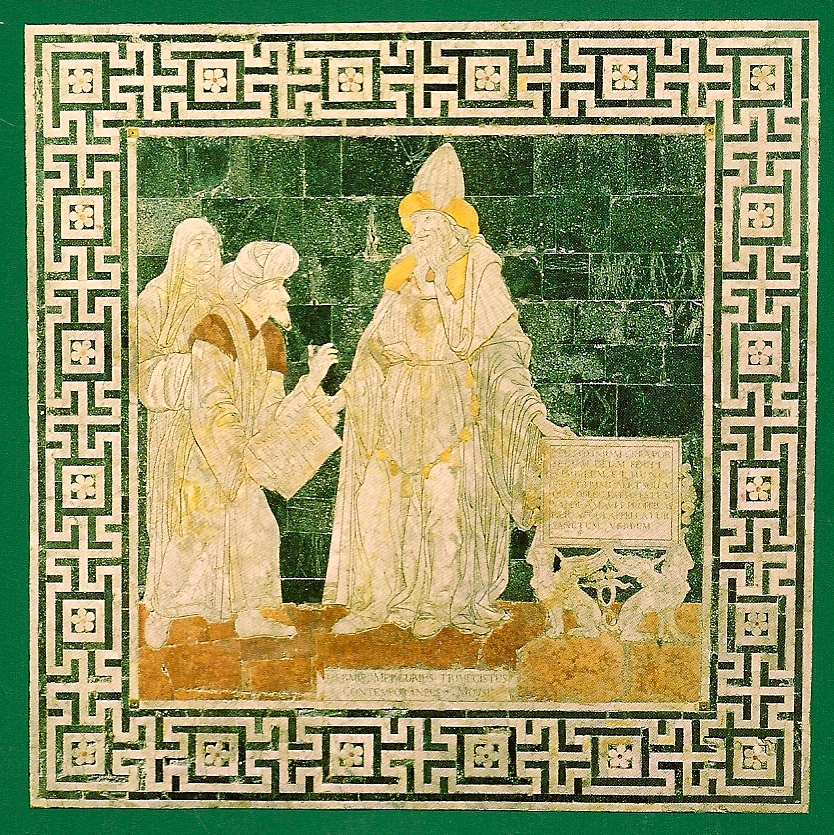
Corpus Hermeticum & Asclepius (Copenhaver Critical Edition)
The definitive scholarly translation of the Greek and Latin Hermetica attributed to Hermes Trismegistus, foundational to Renaissance Neoplatonism and Western esotericism.